
A Brief History of the Early Chesaning Area
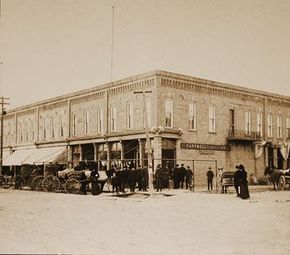
In the year of 1835, by the authority of the territorial legislature, the county of Saginaw was organized. Around 1847 the area of Big Rock was set off as a township and when the township was organized, it was given the name of Northampton, from the old New Hampshire home of some of the leading citizens in those days. The first township elections, held in 1847, are considered to be the official birthday of the community.
It was congressional district 9 north, ranges 1,2,3 and 4 east. In 1853 the township name was changed to Chesaning, the Indian name for “Big Rock”, thus bringing it back to its original name. The township remained as large as this until 1856 when the board of supervisors set off ranges 1 and 2 and called it Brady Township; and in 1857 they set off range 4 as Maple Grove Township. This left range 3 as Chesaning township and that is the way it is today, just about six square miles.
The survey for the first village plat was made and recorded in 1852 and in the early part of 1869; Chesaning was incorporated as a village. The land, 1,920 acres, includes parts of sections 5, 8, 9, 10, 16 and 17 of the Chesaning Township. The first village election was held on April 12, 1869.
Visit The Chesaning Area Historical Museum Website for more information on our rich history.
It was congressional district 9 north, ranges 1,2,3 and 4 east. In 1853 the township name was changed to Chesaning, the Indian name for “Big Rock”, thus bringing it back to its original name. The township remained as large as this until 1856 when the board of supervisors set off ranges 1 and 2 and called it Brady Township; and in 1857 they set off range 4 as Maple Grove Township. This left range 3 as Chesaning township and that is the way it is today, just about six square miles.
The survey for the first village plat was made and recorded in 1852 and in the early part of 1869; Chesaning was incorporated as a village. The land, 1,920 acres, includes parts of sections 5, 8, 9, 10, 16 and 17 of the Chesaning Township. The first village election was held on April 12, 1869.
Visit The Chesaning Area Historical Museum Website for more information on our rich history.

Chesaning Chamber of Commerce
218 North Front Street
PO Box 83
Chesaning, Michigan, 48616
Phone: (989)845-3055 - Fax: (989)845-6006